
“Until the day I die, I will fight for freedom of expression”: Meet Kajeem, the Ivorian reggae-man who celebrates human rights
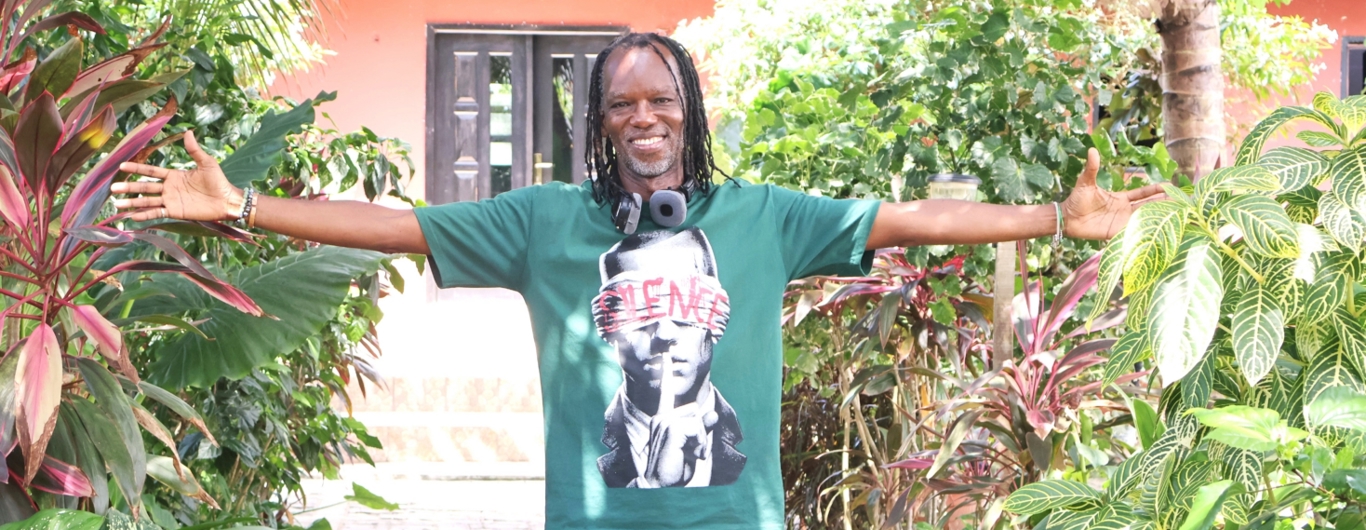
Guillaume Konan, known as Kajeem, is a singer and songwriter who grew up in Abobo, a neighbourhood of Abidjan, the economic capital of Côte d’Ivoire. Now 57, he began his career in the 1990s in rap music before moving on to reggae.
Kajeem is committed to defending rights and freedoms, and speaks out against restrictions on civic space in his country, particularly the right to freedom of expression. He has been working with Amnesty International for over a dozen years as a human rights ambassador.
Following the song “Osons le courage” (Let’s be brave) in 2023, which called on youth to resist injustice, he released in June 2026 the song “En toute liberté” (In total freedom) with artists Didier Awadi from Senegal and Soum Bill from Côte d’Ivoire, and the support of Amnesty International.
“I made my first visit to prisoners when I was 12, as a Catholic boy scout. It was a very formative experience for the young boy I was. I couldn’t understand how people could be put in those terrible conditions, no matter what they had done. So, when I started playing music as a teenager, I gravitated toward genres that stand up for the underdog.
Freedom of expression was one of the first rights I sought to assert. Nowadays, the laws in Côte d’Ivoire regarding the internet are so vague that they have become pretexts for imprisoning whomever the authorities please. There is no worse oppression than the one carried out under the guise of the law. Being able to speak out against injustice is a fundamental right, and until the day I die, I will fight for it.
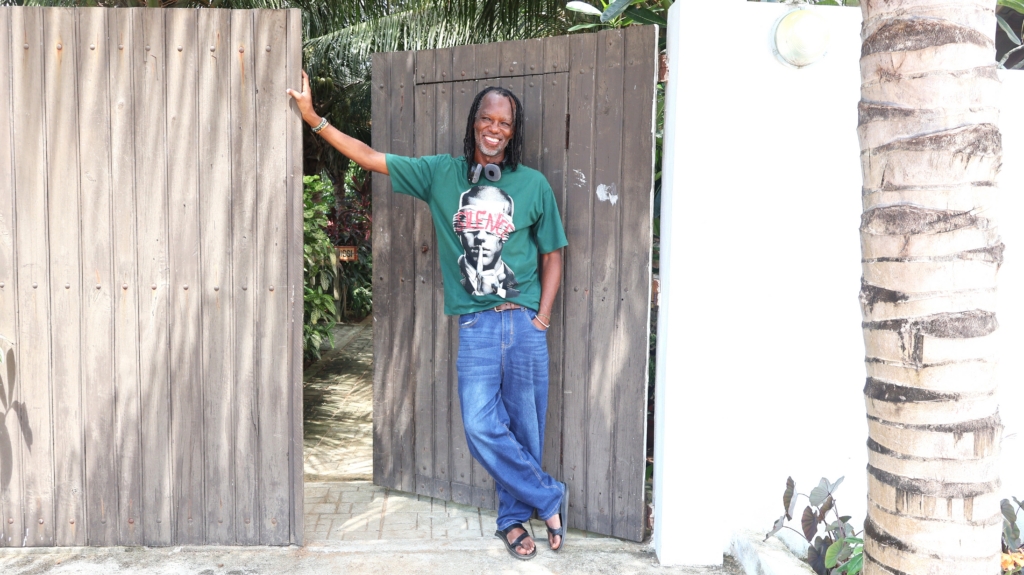
Throughout Côte d’Ivoire’s history, a heavy burden has weighed on defenders of freedom of expression. In my view, politicians will do whatever it takes to hold onto power, even if it means trampling on rights and freedoms. It is up to civil society to fight against this. This doesn’t mean breaking the law or disrespecting anyone, but to remind authorities that certain things should not be done.
I write songs that denounce a system, not individuals.
Ivorian singer Kajeem
Facing intimidation
I’ve faced various forms of pressure. Today, radio hosts are pressured not to play certain songs, and sponsors are pressured to stop supporting certain artists.
The first song of mine which provoked threats was “Sergent 2 togos” (Sergeant 2 togos) released in 2006, which exposed police extortion at roadside checkpoints. I often joke that in other countries, when you’re threatened, you go to the police for protection. But I was being threatened by the police! I had to leave the country for six months.
When I released the song “Tu tournes film” (You’re shooting a movie) in 2023, I faced the same issues, but in a much more intense way. The song “Tu tournes film,” meaning “You’re just blowing hot air”, is about broken promises. An election pledge is a social contract made with the voters, but if you remind those guys of their promises, they get upset!
I woke up one morning to over 1,600 hate messages, including death threats. But I’ve never been very scared by that kind of thing, I think it’s counterproductive because a song has a life of its own, even if its author is dead! People shouldn’t see me as an enemy. I write songs that denounce a system, not individuals.
Human rights do not apply only to a certain category of countries or individuals.
Ivorian singer Kajeem
Understanding the aspirations of African youth
African youth are thirsty for freedom, and they may feel that authoritarian regimes offer things they don’t have under pseudo-democratic regimes. This is an expression of a deep-seated revolt and rejection of the West due to all the abuses linked to colonization and, even before that, to slavery. Youth must realize that this continent can only be built by defending human rights.
People may feel that human rights are a luxury they cannot afford because they have basic needs to meet. But how many people earn a lot of money while living under total oppression? We cannot prioritize our needs by saying, “Let’s eat first and worry about that later.” Human rights do not apply only to a certain category of countries or individuals, they are universal.
For me, the future is bright, as every day we see youth getting engaged despite all the distractions offered to them. I think of myself as a sad optimist, unlike the cheerful pessimists who seem happy but no longer believe in anything and just want to enjoy the moment. When you become aware of the realities, it makes you a little sad, but it motivates you because it shows you the work that needs to be done, and every morning, you head back into the fray.
Watch the video clip “En toute liberté” (In total freedom) with artists Kajeem, Didier Awadi and Soum Bill
Joining forces in song with Amnesty International
In 1988 I was in Abidjan for the historic Human Rights Now! world tour concert organized by Amnesty. After that I kept running into the Amnesty team in the field, whether I was working with the Red Cross, visiting detainees, or organizing events at the university to raise awareness of human rights. We were working on the same issues, so I felt less alone. To me, Amnesty is truly like family.
Our song “En toute liberté” is for all those fighting for human rights, so they have a rallying cry.”
To mark the release of the song “En toute liberté” and as part of the campaign Resist run by Amnesty International, Kajeem and Amnesty International Côte d’Ivoire are organizing a digital campaign, as well as discussions on the right to freedom of expression at universities across Côte d’Ivoire.